
See beyond Renaissance beauty
Recognise the older rivalries, insecurity and private power that shaped the city before its palaces became icons.
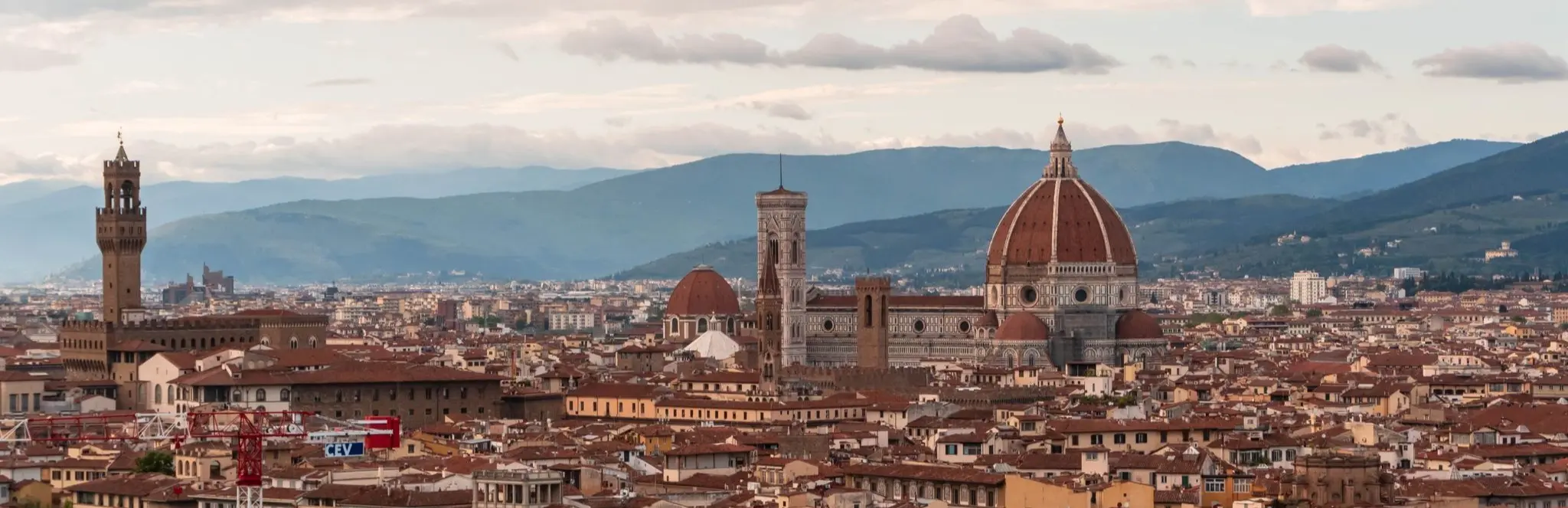
Read Florence's power struggles in stone.
A 90-minute self-guided cultural walk through central Florence, tracing how private fortified towers became merchant residences and Renaissance palaces before civic buildings made public authority monumental.
See what you will understandRecognise the older rivalries, insecurity and private power that shaped the city before its palaces became icons.
Move from fortified towers to merchant homes, Renaissance palaces and the monumental spaces of civic government.
Link Palazzo Pitti, Ponte Vecchio, the medieval centre and Piazza della Signoria along one coherent two-kilometre route.
Editorial perspective
Behind Florence's harmonious façades is a city once crowded with narrow fortified towers. Powerful families used buildings to defend themselves, command streets and turn private wealth into public presence.
This walk follows that transformation in sequence. Towers become merchant residences, residences become monumental palaces, and the Commune answers family power with civic buildings designed to make government visible.
A concise preview of what you will hear along the walk.
Begin with a palace whose name preserves the ambition of the Pitti family, even after the Medici made the building their own.
See how a surviving family tower forced the Vasari Corridor to bend, leaving medieval private power legible within a later ducal project.
Connect a broken marriage agreement and an Easter morning murder with the factional conflict that divided Florence.
Watch the fortified tower-house evolve into a more comfortable merchant residence without losing its careful display of status.
And more along the route.
Florence's towers, palaces and squares become parts of one long argument about who had the right to command the city.
Each stage changes the scale and meaning of architecture, from a family's stronghold to the city's public square.
Palazzo Pitti introduces family competition through the name and scale of one extraordinary residence.
Ponte Vecchio and the Amidei, Buondelmonti and Mannelli towers reveal a Florence shaped by defence and rivalry.
Palazzo Davanzati and Palazzo Strozzi show how security, comfort and prestige produced a new architectural language.
The Bargello and Palazzo Vecchio turn from family power to institutions built to govern the city in public.
Isolated monuments reveal style and decoration. Following them in sequence reveals a political transformation: private families fortify themselves, merchants monumentalise wealth, and the Commune claims the city through public architecture.
You want towers and palaces to reveal more than dates, façades and famous family names.
You want to understand how the two Florences connect rather than treating the Renaissance as a sudden beginning.
You prefer a self-guided route through the historic centre without a fixed group or departure time.
You are interested in how rivalry, wealth, justice and government became visible in the built city.
The walking tour takes about 90 minutes, covers two kilometres and includes 32 VoiceMap locations.
It starts in Piazza de' Pitti, facing Palazzo Pitti, and ends in Piazza della Signoria by Palazzo Vecchio.
The tour explains how family rivalries, merchant wealth and communal government left a sequence of towers, residences, palaces and civic buildings across Florence.
Representative stops include Palazzo Pitti, Ponte Vecchio, Torre dei Mannelli, Palazzo Davanzati, Palazzo Strozzi, Piazza della Repubblica, the Bargello and Palazzo Vecchio.
The published experience is a walking tour through central Florence. Check VoiceMap for the current route, access details and practical guidance before starting.
GeoBeat provides the editorial tour page. The external call to action opens VoiceMap, where access and listening are handled.
Start at Palazzo Pitti and follow the city's transformation from private towers to the civic stage of Piazza della Signoria.