
Follow power through place
Connect courts, prisons, execution sites and public routes with the urban spaces that made papal justice visible.
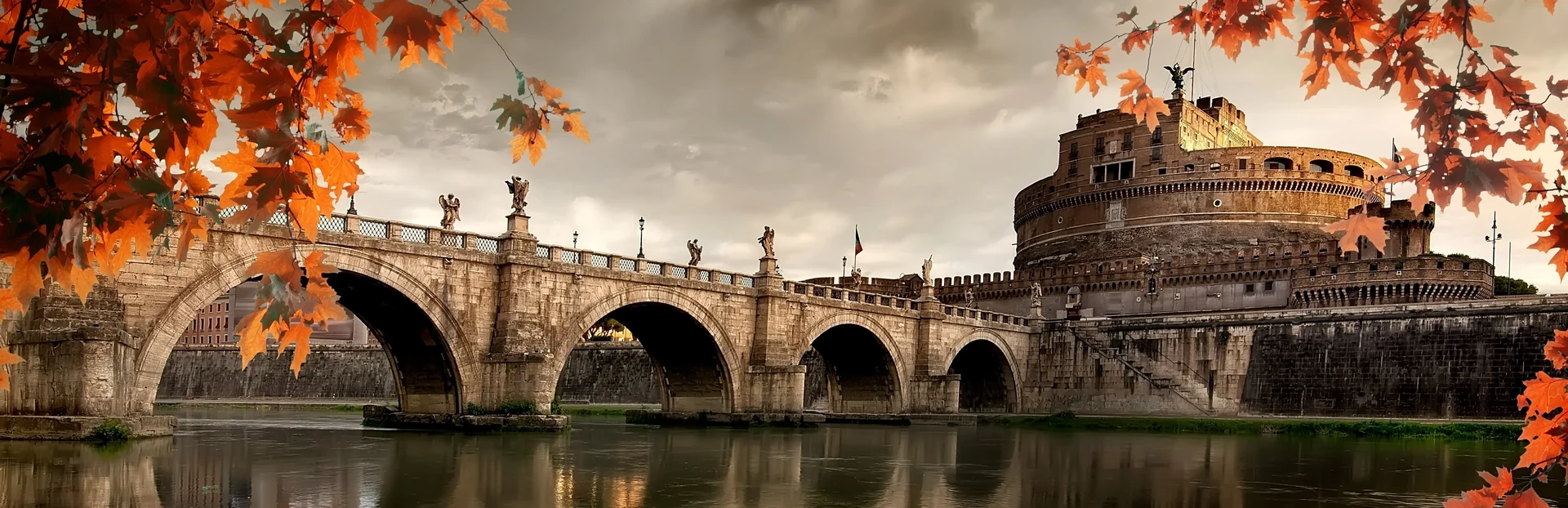
Read the city where sacred authority and public punishment once shared the same streets.
A 75-minute, two-kilometre Rome dark history walking tour connecting Giordano Bruno, Beatrice Cenci, prisons, executions and confraternities with the city's long negotiation between faith, power and public memory.
See what you will understandConnect courts, prisons, execution sites and public routes with the urban spaces that made papal justice visible.
See how figures such as Giordano Bruno and Beatrice Cenci were judged in their time and remembered afterward.
Walk for about 75 minutes and two kilometres without reducing difficult lives to spectacle or true-crime shorthand.
Editorial perspective
Rome's churches, saints and ceremonial spaces are inseparable from the systems of authority that governed the city. Public punishment was not hidden from that sacred landscape; it was staged within it.
This route uses Campo de' Fiori, the way toward the Tiber and the approach to Castel Sant'Angelo to examine justice as ritual, memory and public language. The emphasis stays historical: on institutions, people and the meanings attached to place.
A concise preview of what you will hear along the walk.
Begin in a square where daily public life and the memory of punishment occupy the same ground.
Use the monument to consider how a place of execution became a place of later civic memory.
Follow the institutions, rituals and public spaces through which authority defined guilt and punishment.
Move away from Campo de' Fiori as the story connects prisons, public spectacle and the city's sacred geography.
And more along the route.
A difficult history becomes clearer when power, ritual and place are kept connected.
With cultural context, restraint and attention to the city around you.
The story stays anchored to squares, thresholds and institutions instead of relying on atmosphere alone.
The condemned appear within the legal, religious and social systems that shaped their lives and deaths.
The walk asks how ceremonies of punishment communicated authority to the wider city.
Later monuments and stories reveal how Rome continued to debate the meaning of these events.
Separate searches can turn difficult history into disconnected anecdotes. This walk keeps people, institutions and places in sequence, so the route shows how punishment functioned within Rome's civic and sacred life.
You want to understand how law, religion and public space interacted in papal Rome.
You prefer a self-guided route that gives difficult stories structure without sensationalism.
You notice how monuments and city spaces change the way historical figures are remembered.
You want a thematic route beyond the familiar chronology of emperors, popes and masterpieces.
The walking tour takes about 75 minutes, covers roughly two kilometres and includes 28 VoiceMap locations.
It starts in Campo de' Fiori and continues toward Ponte Sant'Angelo and Castel Sant'Angelo.
No. It is a historical and cultural walking tour about papal justice, prisons, execution rituals, faith, power and public memory.
The central stories include Giordano Bruno and Beatrice Cenci, alongside the institutions and confraternities connected with punishment in papal Rome.
GeoBeat presents the editorial tour page. The external call to action opens VoiceMap, where access and listening are handled.
Begin in Campo de' Fiori and follow the history of judgment, ritual and memory toward Castel Sant'Angelo.