
Go beyond arena clichés
Replace the familiar image of gladiators with a historical sequence shaped by funerals, political rivalry, public crowds and imperial ambition.
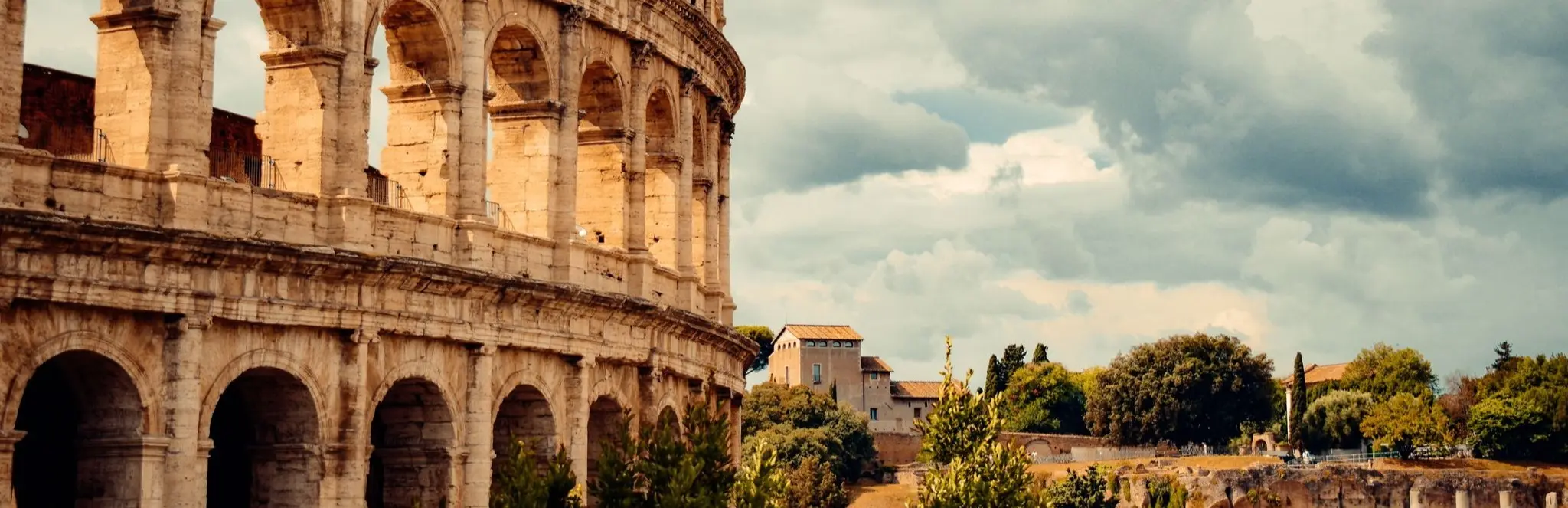
See the Colosseum as the culmination of a story Rome had been building for centuries.
A 90-minute self-guided cultural walk through Rome's gladiator history, linking the Colosseum with the Palatine, Circus Maximus, Forum Boarium and Capitoline Hill to reveal how combat, politics and spectacle shaped the arena.
See what you will understandReplace the familiar image of gladiators with a historical sequence shaped by funerals, political rivalry, public crowds and imperial ambition.
Link the Colosseum, Palatine, Circus Maximus, Forum Boarium and Capitoline Hill across a three-kilometre cultural route.
See how games helped Roman leaders compete for influence and how architecture turned that competition into a lasting civic system.
Editorial perspective
The Colosseum is Rome's most recognisable arena, but it is not the beginning of gladiatorial history. The earliest recorded combat in the city belonged to a funeral in the Forum Boarium, long before emperors made the games part of imperial identity.
This walk keeps that evolution visible. Moving between ritual sites, entertainment grounds, political spaces and monuments reveals how violence became organised spectacle, how spectacle created influence, and why the amphitheatre was the culmination rather than the origin of the story.
A concise preview of what you will hear along the walk.
Begin beside Rome's great amphitheatre, then look beyond it to the older rituals and political contests that made the building possible.
Read the legendary birthplace of Rome as the later seat of emperors whose palaces overlooked and financed public spectacle.
Consider a different arena culture, where mass crowds, racing celebrities and political visibility already shaped Roman entertainment.
Enter the cattle-market district associated with Rome's first recorded gladiatorial combat, held in 264 BC as a funerary rite.
And more along the route.
Rome's arena culture becomes clearer when ritual, politics, crowds and architecture are read as one evolving system.
Each place adds a missing layer, so the Colosseum looks different when you return.
Start beside the Colosseum with the familiar image, then test its assumptions against the older city.
Move through the Palatine, Circus Maximus and Forum Boarium to find the cultures that preceded the amphitheatre.
Use hills, squares and forums to see how spectacle communicated status and authority to Roman crowds.
End near the Colosseum able to recognise it as one decisive chapter in a much longer history.
The amphitheatre can explain its engineering and spectacles, but not the whole process that produced them. Walking through the earlier landscapes of ritual, racing, commerce and government shows how Rome constructed arena culture over time.
You want a clear account of gladiatorial culture grounded in Rome's streets and monuments.
You prefer a self-guided walk that places the amphitheatre within the wider ancient city.
You are interested in how public entertainment, political ambition and architecture reinforced one another.
You want the real historical development of the games rather than a collection of familiar arena myths.
The walking tour takes about 90 minutes, covers roughly three kilometres and includes 28 VoiceMap locations.
It starts in the pedestrian area beside the Arch of Constantine, near the Colosseum, and ends back in the Colosseum area.
The published route starts and finishes outside near the Colosseum, then crosses ancient Rome. Check VoiceMap for the current route details and any practical guidance before starting.
Representative landmarks include the Colosseum, Palatine Hill, Circus Maximus, Forum Boarium, Mouth of Truth, Capitoline Hill, Piazza del Campidoglio, Trajan's Forum and the Basilica of Maxentius.
It explains how gladiatorial combat developed from funerary ritual into political competition, public spectacle and monumental imperial culture.
GeoBeat provides the editorial tour page. The external call to action opens VoiceMap, where access and listening are handled.
Begin beside the Arch of Constantine and follow Rome's gladiatorial story from funeral ritual to imperial spectacle.